Survival Log How to Build a Safehouse
Zone floors so chores, sleep, and defense stop colliding.
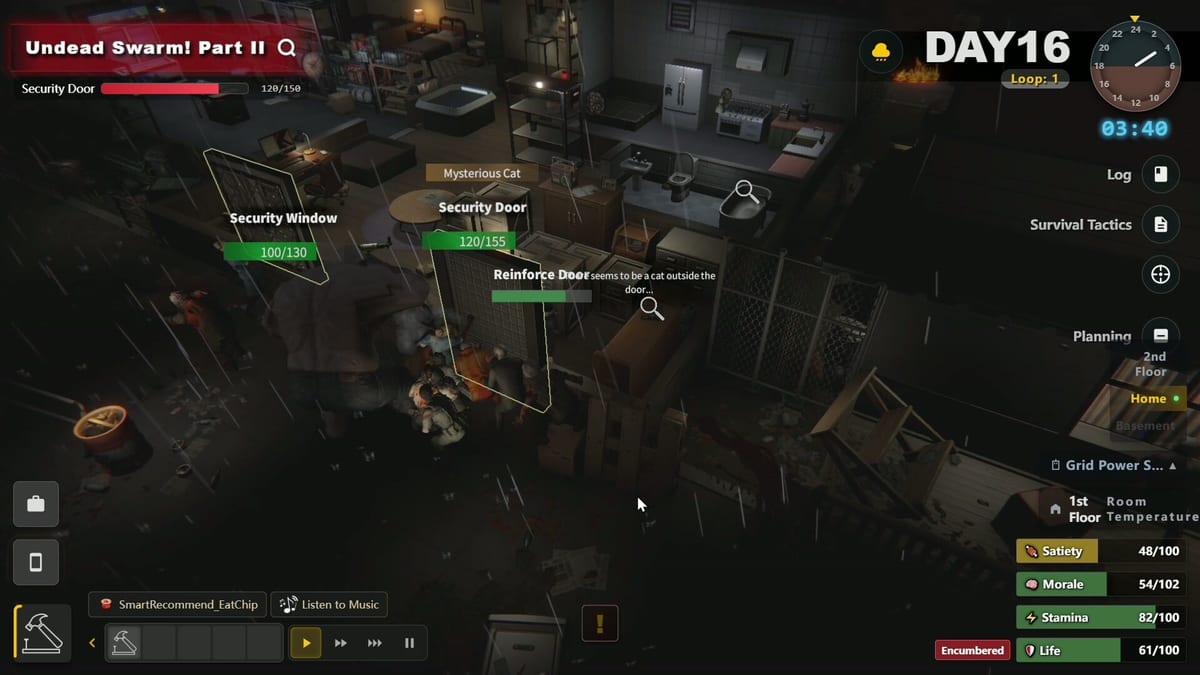
A Survival Log safehouse is a machine made of rooms. This guide shows how to build that machine without painting yourself into a hallway trap. You will combine layout, fortification, farming space, and basement power into one plan that survives the demo’s mean nights and scales toward the 2026-08-12 release.
Design from paths, not from furniture catalogs
People walk. Zombies test. You carry cans. If the path from entrance to storage to kitchen is a maze, stamina dies daily. Start with Floor Layout and sketch zones: public risk near entrances, quiet sleep deeper or higher, noisy work isolated, basement for Basement Generator logistics.
Sequence of builds
- Secure one sleep space and one toilet-level hygiene story if present in your build.
- Create a cooking lane tied to Cooking and Farming and Cooking Space.
- Board critical openings via Fortify Doors and Windows.
- Place storage beside the routes you actually use after How to Stockpile runs.
- Install power with failover from Power Grid.
- Add farming tiles only when water and attention exist for Farming.
- Layer traps using Traps and How to Defend.
Multi-floor rules of thumb
Lower floors take more noise and breach risk. Upper floors can hold sleep and quiet morale spaces if stairs remain controllable. Do not put your only food stock on the breach floor. Do not put the generator somewhere you forget to visit because the path is annoying.
Neighborhood and rescue space
If you plan neighbor rescue, reserve a room before you fill every tile with shelves. Crowding taxes Hunger, Stamina, and Morale. Character pages like Worker and College Student change how much renovation you can finish early, not whether people need space.
Power-integrated architecture
Diesel smell and noise belong away from sleep. Manual stations need clear access during blackouts. Solar pieces need honest placement, not decorative roofs you never maintain. How to Manage Power should be open while you rearrange furniture, not after the first blackout rant.
Defense-integrated architecture
Choke points are designed, not discovered mid-bite. Funnel approaches past traps and boarded windows. Keep repair materials staged near likely failure doors. Map knowledge from Exploration Risk tells you which facing is uglier.
Demo remodel exercise
Play two days without remodeling, only noting friction. Then spend a home day fixing the three worst paths. Use Day Planner to protect that remodel day from shopping creep. Players who remodel every hour never stockpile; players who never remodel walk themselves to death.
Aesthetic morale without sabotage
Pretty rooms help morale, but not when they block stretcher-wide hallways. Place comfort items after the machine works. Furniture and Appliances explains which pieces are functional versus flavor.
Launch-ready habits
When catalogs expand at full release, keep your zone language. New appliances should inherit old lanes. Bookmark Safehouse Hub and this guide as your renovation checklist after patches noted in Updates Hub.
Takeaway for How to Build a Safehouse
Before you close this guides page (guides/how-to-build-safehouse), write one Steam-demo action that only this article justifies. Spend Planning Points on that action alone, then score dusk by meters and doors. If Midnight Workshop or Lilith Games patch the related system, re-open this URL first — not a random sibling — so the lesson stays attached to How to Build a Safehouse instead of dissolving into generic prep advice.
Frequently Asked Questions
Quick answers to the most common survivor questions.
Should I build up or fortify first?
Fortify critical openings on the floors you already use, then expand upward. Empty fortified floors are less useful than a living core.
Where does the kitchen go?
On a short path from storage and water, away from the noisiest breach magnet if possible.
Can traps replace boards?
No. Traps multiply good pathing; they do not seal windows.
How many remodel days per week?
In the demo, one focused remodel day after two practical days teaches more than constant fidgeting.
What about basement-only living?
Possible for power focus, but morale and farming often want light and space upstairs. Mix zones.