Survival Log Map Hub
Learn where to go, when to leave, and how hard the streets hit.
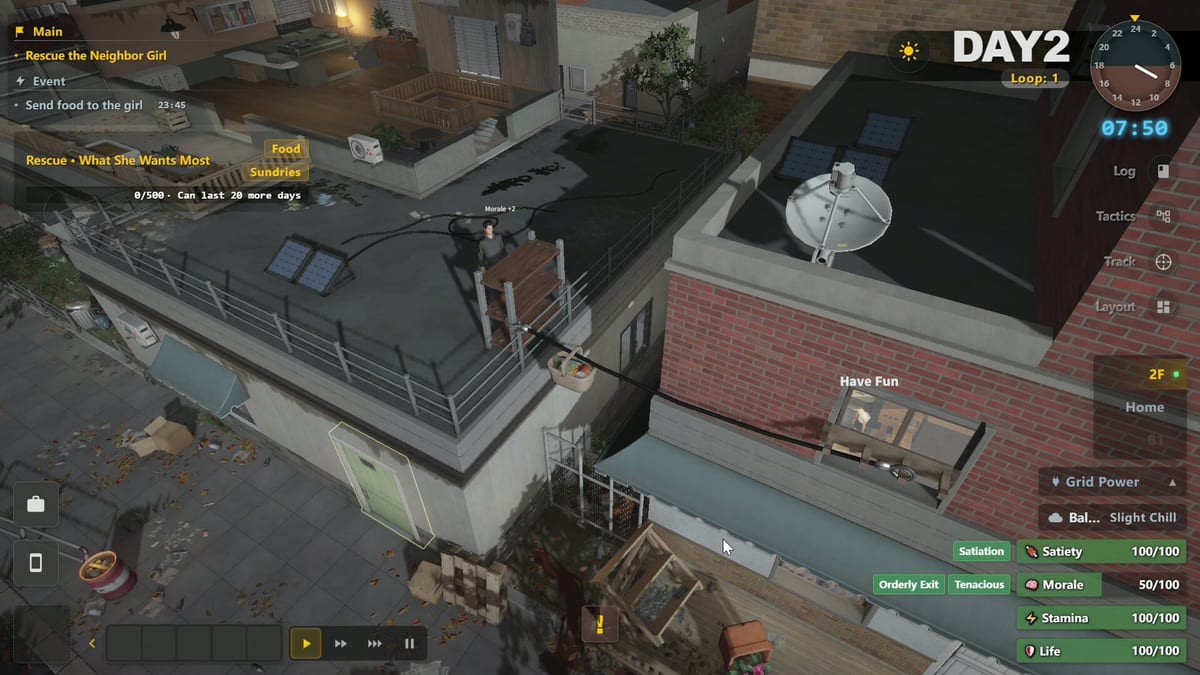
The Map Hub orients you inside Survival Log’s city pressure cooker. Pre-disaster streets teach shop locations and travel time. Post-disaster streets teach fear, stamina taxes, and whether a loot fantasy is worth a bitten return trip. Use this hub before you treat every icon as mandatory.
Location literacy
City Locations covers practical stops: food retail, fuel access, furniture sources, and places that support neighbor rescue stories. Link those stops to shopping goals in How to Stockpile instead of wandering until Planning Points evaporate.
Risk as a resource cost
Exploration Risk reframes danger as a budget. Night timing, load weight, and morale all change whether a route is smart. Pair it with How to Explore and Hunger, Stamina, and Morale so you stop calling bad trips unlucky.
Drone trade and mid-run logistics
Drone trade can patch holes after the outbreak phase, yet it should not justify an empty pantry on day one. Map knowledge still matters because call-ins and meetups consume the same attention that repairs and cooking need. Keep Priority Checklist honest even when drones feel like a safety net.
Safehouse as the map center
Every route should answer how it improves the multi-floor holdout. Fuel runs support Power Grid. Board materials support Fortify Doors and Windows. Food runs support Cooking. If a location offers none of those, it is sightseeing.
Demo scouting habits
In the live demo and full game, draw a personal circuit: water, calories, fuel, boards, home. Repeat until timings feel boring. Boredom is success. Add Farmers Market and Renovation Store stops only when Priority Checklist tiers allow fresh food or layout upgrades.
Related planning tools
Use Day Planner to assign map goals to Planning Points. Use Stockpile Planner so you know which shelves justify another street crossing.
Mental cartography
Draw your circuit on paper with four labels only: water, calories, fuel, boards. If a location does not serve those labels yet, it is optional. Optional is how players die with interesting junk. Expand the paper map only after Priority Checklist tiers allow furniture and farming stops.
Return rituals
Every successful outing ends with the same ritual: unload, drink, glance at doors, glance at power, cook if needed. Locations matter less than returns. If your returns are sloppy, the map is not the problem—home systems are. Fix that before adding distant icons to your ambition list.
Teaching routes
When explaining the city to a friend, narrate timings, not lore. “This loop takes a calm morning and fills Tier 0” is better than a tour of flavor text. Map pages should make time visible.
Landmark exploration sites
Read Exploration Sites for Ruined Supermarket (medium, dark, flashlight, retreat) and Abandoned School (large, wing-by-wing) guidance, including progress-bar risk discipline. Pair pre-disaster stops with Farmers Market and Renovation Store when checklist tiers allow.
Hospital, car lot, and warehouse home
The full map adds a used car lot before disaster and a deserted hospital after. Hospital and Used Car Lot covers trunk habits (car goods skip Broad Shoulders), August 14 hospital interact fixes, August 15 overrun marks, and the two-room warehouse-manager home. If a site icon is marked overrun, it is not a shopping trip.
Frequently Asked Questions
Quick answers to the most common survivor questions.
Should I explore widely on day one?
No. Learn a short circuit of essential shops first, then widen after your safehouse basics exist.
What makes a location high risk?
Long distance, heavy return loads, poor timing, and weak morale or stamina buffers. See Exploration Risk.
Do map pages include spoilers?
They focus on route logic and category stops rather than exhaustive secret lists.
How does rescue fit map planning?
Neighbor rescue is a side objective that consumes carry weight and safehouse space. Budget it like a loot decision.